




Thailand's weed shops are real and they are licensed — but what they may lawfully sell you changed on 26 June 2025, and most of what is written online about Thai cannabis predates that change. If your picture of Thailand comes from the 2022–2025 boom years, it is out of date. Law stated as at 21 August 2026.
What 2022 actually did
On 9 June 2022 a Ministry of Public Health notification removed the cannabis plant from Category 5 of the Narcotics Code. That is the whole of it. It did not legalise recreational use, it did not create a retail licensing regime, and it left extracts above 0.2% THC classified as narcotics.
The shop boom that followed grew in the gap: a Cannabis Act was drafted, argued over, and never passed, so thousands of dispensaries opened into a regulatory vacuum rather than into a permission. That vacuum is what the government has spent the years since closing.
Since June 2025, cannabis flower is a controlled herb
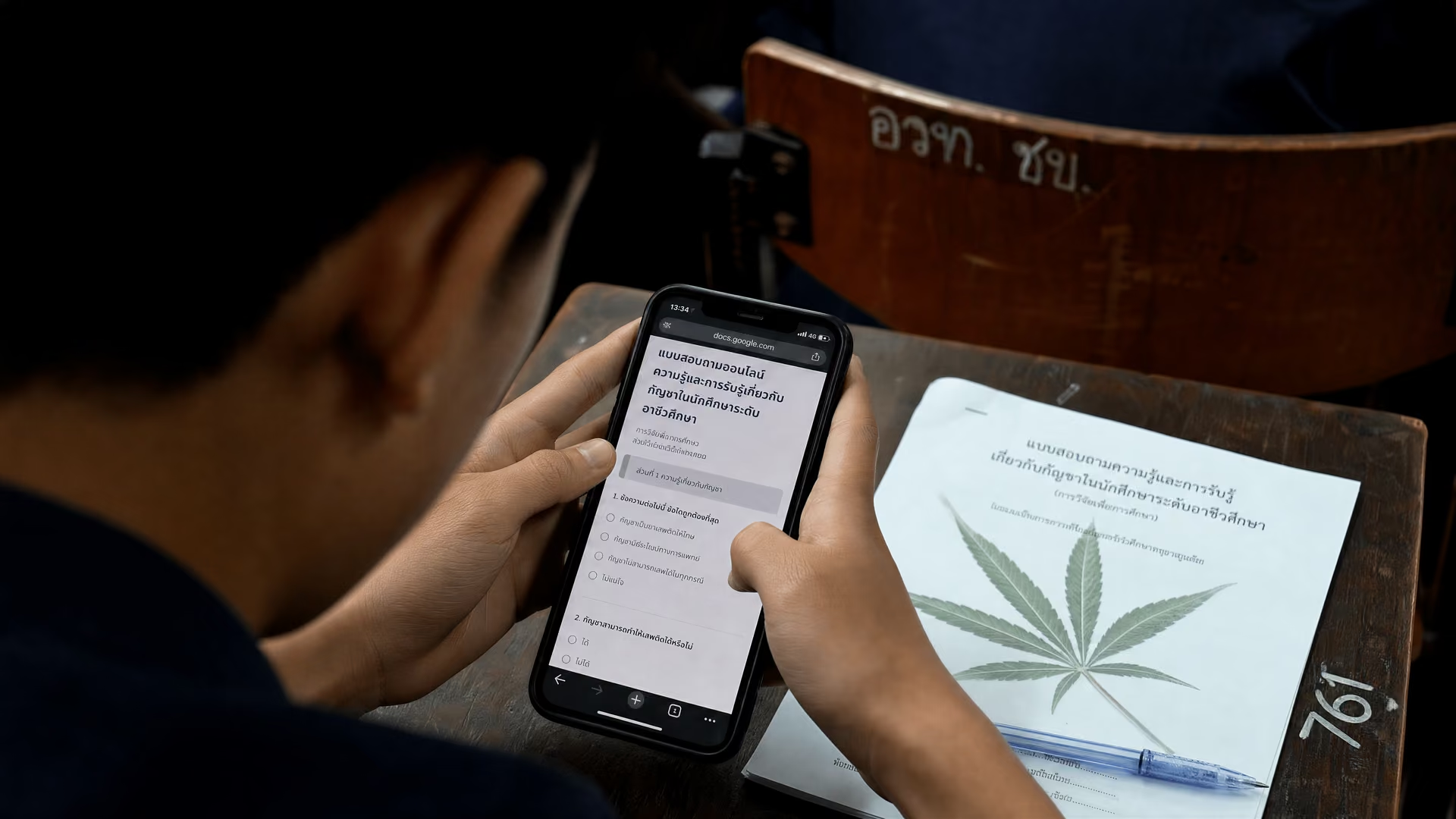
A notification signed on 25 June 2025 and in force from 26 June 2025 reclassified cannabis buds as a controlled herb under the Protection and Promotion of Traditional Thai Medicine Knowledge Act B.E. 2542 — traditional medicine law, not narcotics law. It remains the operative instrument today. In practice it requires:
- A prescription from a licensed Thai practitioner before flower may be sold, for a maximum 30-day supply.
- A qualified practitioner present at the shop.
- Monthly returns to the Department of Thai Traditional and Alternative Medicine.
- No advertising, no online sales, no vending machines, and no sale near schools or temples.
- A minimum age of 20, and no sale to pregnant or breastfeeding people.
Breach carries up to a year's imprisonment and a fine, plus suspension of the shop's licence.
The rules tightened again in April 2026
A ministerial regulation published in the Royal Gazette on 30 April 2026 raised the bar for holding a flower-sale licence. A licensee must own or possess the premises, hold a companion licence such as a clinic, pharmacy or herbal-medicine licence, keep stock in segregated off-floor storage, run an odour and smoke elimination system, and have a trained staff member present the entire time the shop is open. Existing licences must re-qualify at renewal, and a licence that has been suspended cannot be renewed at all.
Enforcement behind this is real. Between October 2025 and mid-2026 authorities inspected well over a thousand shops, suspended dozens of licences, and opened legal proceedings — while press reporting simultaneously records that compliance at the counter is uneven. Both things are true, and only one of them is the law.
What is still an offence, whatever a shop tells you
Smoking cannabis in public is a public-nuisance offence under the Public Health Act B.E. 2535, punishable by up to three months' imprisonment and a fine of up to 25,000 baht. A prescription is not a defence. That covers a street in Bangkok, a beach in Phuket or Koh Samui, and a bar terrace in Pattaya.
Taking cannabis out of Thailand is a separate criminal offence and is being policed hard. Narcotics dogs now work the check-in halls at Suvarnabhumi, tens of thousands of kilos have been seized at the border since late 2025, and foreign nationals have been arrested departing Bangkok, Phuket and Samui — several then prosecuted again on arrival at home. Whatever you may lawfully hold here does not travel.
Two details that are widely got wrong
The 0.2% THC threshold applies to extracts, not to flower. Extracts above it remain Category 5 narcotics; extracts and CBD products below it reach the market as herbal or cosmetic goods without a prescription. Flower has no THC ceiling at all — it is controlled by what it is rather than by how strong it is, so 5% and 25% flower sit in exactly the same legal box.
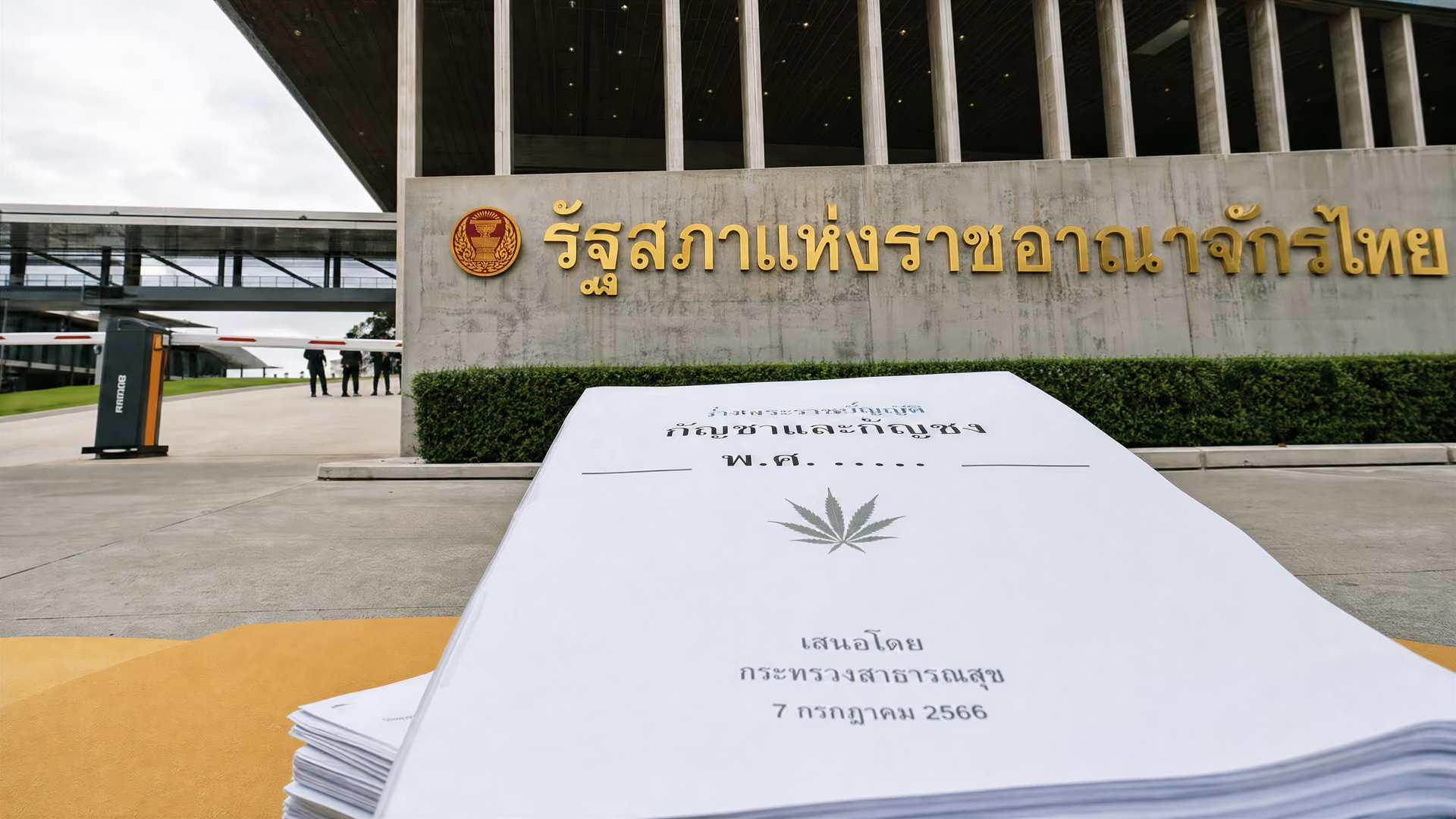
Cannabis has not been re-listed as a narcotic. A draft Cannabis Control Act was handed to the Health Minister in July 2026 and, as of August 2026, has not reached cabinet or parliament; consideration is not expected before 2027. Senior figures have publicly floated tightening further. Nothing about the current position should be assumed to be permanent.
How to tell a licensed shop from an unlicensed one
Flower shops are licensed by the Department of Thai Traditional and Alternative Medicine, and since April 2026 DTAM has published a public map of licensed outlets with locations and licence expiry dates. An outlet that does not appear on it is treated as unregistered. That map, and the licence itself, are the only documents worth trusting — not a certificate in a frame, and not what the sign outside says.
What this directory is, and what it is not
This is an information directory. It lists cannabis shops across Thailand — Bangkok, Phuket, Chiang Mai, Pattaya, Koh Samui, Krabi — and it sells FastTrack: a shop's address and contact details, delivered to you. It does not sell cannabis and it is not a shop. Start with the directory search, see locations on the map, or read the frequently asked questions. Our safety guidance covers the rest.
A listing is information about a venue. It is not an endorsement, and it is not a statement that the venue holds a current licence or complies with the prescription requirement.